
Our Services
- General
- Restorative
- Implants
- Cosmetic
- Orthodontic
- Periodontic
- Pediatric
- Endodontics
- Oral & Maxillofacial Surgery
Dental Hygiene and Periodontal Health
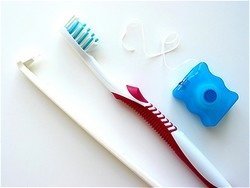
While at our office, we make sure that you receive the highest level of service and ensure that our dental work is of the highest quality. To ensure that you maintain great oral health, this level of quality needs to extend into your personal oral hygiene routine. We can help you establish a dental hygiene routine that will keep your teeth healthy and white. If you have any questions about your current hygiene plan please ask us.
Your teeth are not the only important part of your mouth. Your gums are essential to oral hygiene as well. We can provide periodontal cleanings and treatment, or refer you to one of our recommended specialists. Please let us know if you have any questions.
Digital X-Ray
Digital x-rays are quickly becoming adopted by a large percentage of the dental industry. A digital x-ray allows the dentist to take an image of the tooth or teeth and put it into an imaging program. Within this imaging program, there are a number of tools that will allow the dentist to take a very close look at the teeth and surrounding structures with amazing accuracy. As a benefit to the patient, the digital x-ray also provides nearly 80% less radiation than a standard x-ray. This is due to the fact that the digital version of the x-ray is much more sensitive to this radiation and has been specifically designed with the patient in mind.
Oral Cancer Screenings
Oral cancer screenings are a very important part of the dental visit for the patient. With the advances in modern technology, we are now able to pinpoint the start of a potential problem much earlier in its evolution. The ability to do so is extremely important in being able to treat any issues prior to them becoming a major irreversible problem.
The oral cancer screening is often completed with an ultraviolet light or similar device that allows us to view issues that can't always be detected by the human eye under normal conditions.
Certain lifestyle choices can have a great impact on the health of tissues and your overall health in the mouth. If you are a smoker or heavy drinker, make sure to get regular screenings when you visit the dentist.
Crowns
Over time our teeth begin to weaken and become more susceptible to problems such as decay, cracks, discoloration and others. If you feel your smile isn’t what it once was, crowns can help you recover your smile. If your dentist notices that a tooth is decayed or seems weakened/cracked a crown may be necessary to make sure that there are no additional problems with the tooth. In cases like this a filling or bonding will not be sufficient.
The process of installing a crown takes 2-3 visits to the dentist. On the first visit the tooth will be reshaped by filing down the enamel so that the crown can be placed over it. You will be given a local anesthetic before this part of the procedure so that you do not experience any discomfort. Once the tooth has been reshaped, a mold will be taken of that tooth and the surrounding teeth. This mold will be sent to a dental lab so that your new crown can be made so that it fits in the spot created for it and looks the same relative to the surrounding teeth. Before leaving, your dentist will fit you with a temporary crown until your permanent crown is ready.
The crown takes about 2-3 weeks to be returned to your dentist. At this time you will have another appointment to place and fit the permanent crown. You will again have a local anesthetic to numb the area and the tooth will be placed using a cement to ensure the tooth sets in place. When you look in the mirror, you will see your old smile back. Crowns are durable and will usually last about 10-15 years. You should care for it as you would any of your other teeth with regular brushing and flossing. Call us today if you would like to learn more about how crowns can help restore your smile.
Crowns can be made from porcelain, porcelain fused to metal, or a full gold crown. To maintain a natural look and feel a porcelain finished crown is best, as it can be matched to the shade of your other teeth. This will allow it to blend in and appear just like one of your natural teeth.
Dentures
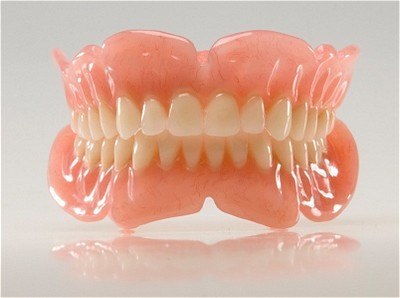
Dentures are a replacement for missing teeth that can be removed and put back into your mouth as you please. Depending on each individual patient case, they may receive full or partial dentures. Full dentures are used when all of the natural teeth are removed from the mouth and replaced with a full set of dentures. There are two types of full dentures.
- Conventional Full Dentures - This is when all the teeth are removed and the tissue is given time to heal before the dentures are placed. It could take a few months for the gum tissue to heal completely, and during this time you will be without teeth.
- Immediate Full Dentures - Prior to having your teeth removed, your dentist takes measurements and has dentures fitted for your mouth. After removing the teeth, the dentures are immediately placed in your mouth. The benefit is that you do not have to spend any time without teeth. You will, however, need to have a follow up visit to refit your dentures because the jaw bone will slightly change shape as your mouth heels. The dentures will need to be tightened after the jaw bone has healed.
Partial dentures are another option when not all of your teeth need to be removed. This is similar to a bridge, but it is not a permanent fixture in your mouth.
Your dentures may take some time to get used to. The flesh colored base of the dentures is placed over your gums. Some people say that it feels bulky or that they don't have enough room for their tongue. Other times the dentures might feel loose. These feelings will affect the way you eat and talk for a little while. Over time, your mouth becomes trained to eat and speak with your dentures and they begin to feel more and more like your natural teeth. They may never feel perfectly comfortable, but it is much better than the alternative of not having teeth.
Even though dentures are not real teeth, you should care for them like they are. You should brush them to remove plaque and food particles before removing your dentures. After they have been removed you should place them directly into room temperature water or a denture cleaning solution. Never use hot water because it could warp the dentures. Your dentures are delicate, so make sure you are careful when handling them so you don't drop them. Also, never try to adjust your dentures yourself. You could ruin them, so you should always seek assistance from your dentist if they feel uncomfortable or loose.
Bridges
Dental bridges are a great way to replace missing teeth. Your existing teeth are used to literally create a bridge to cross the area where your tooth is missing. Bridges are made from gold, metal, alloys, or porcelain to ensure that they are strong and durable.
The process of creating a bridge begins by creating abutments out of your existing teeth where the bridge will be attached. The existing teeth are recontoured to provide a base for the bridge. After the abutments have been created, a mold is taken of the area which is sent to a dental lab. The lab is able to use the mold to create a bridge that will fit properly and feel as close to your natural teeth as possible. The bridge consists of two crowns on either end to place on the abutments and a pontic, which is the new tooth that replaces your missing tooth.
We will fit you with a temporary bridge while we wait for the lab to craft your permanent bridge. This will protect the abutments and the exposed gum areas and look more appealing than having a missing tooth. When the permanent bridge has been created, you will have a follow up visit to set the bridge. It will be placed on the abutments and the dentist will then use an adhesive to make sure that the bridge is set.
The bridge may take a little while to get used to, but after a few days it should feel like you have your own teeth back again. You should eat soft foods for the first few days after having your bridge placed. After the initial phase, you will be able to eat whatever you want with no issues.
If you are missing a tooth you should strongly consider having it replaced. Besides the aesthetic disadvantage of missing a tooth, it could also cause structural changes to your mouth and jaw, as well as making it difficult to eat or speak properly. Set up an appointment today to restore your smile.
Dental Implants FAQ's
What is a dental implant?
A dental implant is a permanent new root for a missing tooth. It is a titanium screw that is placed into the jaw bone. An abutment and crown is then placed on the implant to provide a new tooth that is permanent and looks just like a natural tooth.
How are dental implants different than dentures?
Dentures are a removable set of teeth or partial set of teeth that need to be removed and cared for in a special manner. They can often feel bulky and are difficult to get used to. Dental implants are a permanent replacement for missing teeth that can be cared for just like natural teeth.
What are the benefits of dental implants?
Dental implants look and feel just like real teeth, they are permanent, you can eat the foods you want without any fear of embarrassment, and they procedure is very successful and fairly inexpensive.
Who can place a dental implant?
Your dentist may be able to perform implants in their own office based on their training. If not, they will recommend you to an implantologist, cosmetic dentist, or another specialist that will perform the procedure.
How much do implants cost?
The price of your dental implants will vary based on the level of experience of your doctor, how many implants you are having placed, amount of insurance coverage, and more. Schedule a consultation with us to determine a price for your implants and a financing plan if necessary.
Do dental implants hurt?
No. A local anesthetic will be given before the procedure so that you do not feel any pain. If you have anxiety or fear you should discuss sedation options with your dentist.
How long do implants last?
When cared for properly, implants should last a lifetime. Proper oral hygiene and regular dental visits are essential to the success of your implant.
Whitening and Bleaching
Keeping our teeth their whitest is a lot harder than it sounds. With all the coffee, wine, smoking and other foods that have the ability to stain our teeth on a daily basis, even proper maintenance sometimes leaves them a little lackluster. Teeth whitening is an excellent way to restore the natural color of your teeth or even make them whiter than your natural color if you would like.
To accomplish the whitening of your teeth, we utilize a tray whitening system. This tray whitening system is completed in 2 steps. The first step is to make an impression of your teeth. With this impression, we'll craft you custom whitening trays that you can use over and over. Finally, you will take the whitening gel and put it in the gel for a short period of time over a period of a few days. This often results in a whiter smile of 4 - 8 shades!
Please contact us today to see if you are a candidate for this type of whitening.
Veneers
Veneers are an excellent way to redesign and reshape your entire mouth. Veneers are a very thin ceramic shell that covers your existing tooth structure. In placing these new veneers on your teeth, you are able to fix the look of issues such as staining, cracked teeth, spaces, misaligned teeth, chipped teeth and many other issues.
Veneers are an excellent way to redesign and reshape your entire mouth. Veneers are a very thin ceramic shell that covers your existing tooth structure. In placing these new veneers on your teeth, you are able to fix the look of issues such as staining, cracked teeth, spaces, misaligned teeth, chipped teeth and many other issues.
As the veneers are finalized, we will make every effort to make sure that your new veneers will feel just like your natural teeth. We will bond them into place ensuring that you can enjoy your new smile for a very long time!
Inlays and Onlays
Inlays and onlays are often referred to as partial crowns. They use the existing tooth as a base and fit the inlay or onlay onto the tooth. This is done to strengthen the tooth, restore its shape, and prevent further damage. An inlay is done when there is no damage to the cusps of the tooth and the inlay can be placed right on the tooth. An inlay is used when the damage is a little more extensive.
The decayed area of the tooth is first removed during the procedure. A mold of the tooth is then taken and sent to a dental lab. They create a restoration made from porcelain, gold, or a composite resin. The restoration takes about 2-3 weeks to make, so a temporary inlay or onlay will be placed on the tooth for that time. During your next visit the inlay or onlay will be placed into your mouth and set with cement. Your tooth will look natural and you or anyone else won't be able to tell the difference.
Bonding and White Filling
Bonding is a popular method to enhance the aesthetics of your smile. Bonding can be used to correct cracks or gaps in teeth, as a filling after a cavity has been removed, or to cover up stains or discolored teeth.
A composite resin is used on the affected tooth or teeth. It is molded and sculpted over an adhesive gel that is placed on the tooth. After the resin has been applied an ultraviolet light is used to harden the resin, which is then polished to give you a fresh, new smile.
Bonding is an obvious improvement over unsightly silver amalgam fillings. With the advancements in dental technology, bonding usually lasts for over 10 years. It is a safe, affordable, and attractive solution for many dental problems.
Clear Braces

Whether you're an adult or a teen, we all want to look our best at all times. Changing the way your teeth are structured takes time and there are now ways to keep you looking your best during this period. Clear braces or ceramic braces are translucent. This new technology is available for most cases. The great benefit of these braces is that you won't have to have that metallic look. In addition, clear braces are specifically designed so that they won't stain or wear over time.
Give us a call today to see if you're a candidate for ceramic braces!
Night Guards
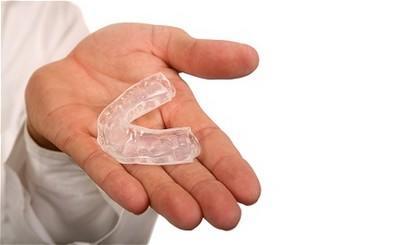
Many people are afflicted with bruxism, or teeth grinding. Some people may do this consciously during the day, but it is a larger problem at night while you are asleep. Grinding your teeth can damage enamel, wear down teeth, cause jaw pain, or irritate your gums. The noise from teeth grinding can also disturb your spouse's sleep if loud enough.
If you grind your teeth you should consider a night guard. The night guard, which is very similar to a mouth guard worn by athletes, provides a barrier between your top and bottom teeth while you sleep. All night guards are custom fitted for comfort and to allow for proper breathing. Your dentist will take an impression of your teeth and have the night guard created by a dental lab. Night guards are very durable and can be used for up to 10 years.
There are also some things that you can do to try to stop teeth grinding. You can train your jaw to be free and easy rather than clenched. Refrain from chewing gum or on other objects like pens. You should also avoid alcoholic drinks and drinks with caffeine, as these can increase the likelihood you will grind your teeth. If you suspect you might be grinding your teeth at night set up an appointment with us today.
TMJ

TMJ is the acronym for temporomandibular joint, which connects your lower jaw (the mandible) to your skull at the temporal bone. This joint controls many jaw functions, like chewing. If the chewing muscles or the joint itself are causing you pain you may have temporamandibular disorder, or TMD. TMD can be caused by stress, continual clenching of the jaw muscles, or teeth grinding.
Some of the symptoms of TMD are:
- Pain when opening or closing mouth
- Trouble chewing
- Jaw becoming stuck open or shut
- Headaches or ear pain
- Clicking or popping sounds when opening your mouth
- Teeth Grinding
Many of these symptoms can often be associated with other health problems, so only a medical professional can tell you if it is due to TMD. Teeth grinding is an especially problematic symptom because it can lead to further problems. Prolonged teeth grinding, or bruxism, can cause enamel to wear off teeth and expose dentin. This material is softer than enamel and more susceptible to decay. Sensitivity to hot and cold food or drink may also develop from excessive teeth grinding.
Many of these symptoms can often be associated with other health problems, so only a medical professional can tell you if it is due to TMD. Teeth grinding is an especially problematic symptom because it can lead to further problems. Prolonged teeth grinding, or bruxism, can cause enamel to wear off teeth and expose dentin. This material is softer than enamel and more susceptible to decay. Sensitivity to hot and cold food or drink may also develop from excessive teeth grinding.
Biopsy
Throughout the medical field, a biopsy is simply the removal of a tissue sample to determine if it is diseases. In dentistry, teeth and gums are sent for biopsy. The role of a biopsy in the dental industry is to diagnose oral cancer. In these instances, a brush biopsy is used to identify oral lesions that warrant further attention.
If you have unexplained lesions in your mouth, they need to be examined by a dentist. They may or may not be cancerous, but they need medical attention nonetheless.
Periodontal (gum) Disease
Periodontal (gum) disease is insidious. It is an infection of the gums that starts out as plaque, an opaque film on the teeth that hardens to form tartar. As tartar accumulates, it harbors bacteria that attack the soft tissue around the gums. This is the early stage of gum disease known as Gingivitis. Left untreated, Gingivitis becomes Periodontitis which ultimately destroys the tissue surrounding your teeth AND the bone that holds your teeth in place. Except for bad breath and gums that bleed, there are very few early warning signals. The disease advances silently, often without pain, and before you know it, you are losing your teeth and you don't know why.
Tooth loss is only the most obvious indicator of gum disease. Scientific research has discovered linkage between gum disease and stroke, heart disease, diabetes - even an increased risk for pregnant women. When your gums become diseased, your entire immune system is weakened.
In the past, fear of painful dental surgery has kept people with gum disease from seeking the care they needed. Well, those days are gone forever.
Scaling and Root Planing

Gingivitis is a generative disease that left untreated, will cause significant tooth and gum deterioration. Just the word gingivitis can strike panic in a patient’s mind. The reality is that the treatment is simple and performed right in your dentist’s office.
Plaque and tarter that sits on the teeth provides an environment, which allows bacteria to thrive and multiply. The bacteria cause the gums to become inflamed and bleed. The condition becomes more noticeable when you brush your teeth or sometimes when you eat. These are signs of the early stage of gingivitis. Gingivitis is easily treated by having the hygienist scaling and polishing the teeth. If gingivitis is left untreated, the condition will progress and the roots will need a planing. The difference between scaling and root planing is simple. Scaling is the removal of the dental tartar from the tooth surface Root planing is the process of smoothening the root surfaces and removing the infected tooth structure.
As a non-surgical procedure, scaling and planing is performed without any anesthesia, in the dentist’s office. While the procedure is usually painless, advanced stages of gingivitis may make it necessary to numb the area for complete comfort. Deep scaling and root planing is usually broken down into one section of the mouth per appointment. This allows for adequate healing time, and reduces the time for each appointment.
Do you wake in the morning with sore jaws?
When you bite, do you feel like your jaw is lopsided? If so, then you may need an occlusal adjustment.
An occlusal adjustment corrects the alignment of the bite, that is a result of loose, shifting, crowded, or missing teeth. The result is an evenly distributed bite that eliminates irregular pressure on one side of the mouth. Once your bite is adjusted, your teeth will meet properly. Occlusal adjustment causes minimal pain, and only a little discomfort. The adjustment is made by using a dental drill using a fine filing stone. In addition to the actual adjustment, removal mouthpieces are also utilized, to protect the tooth surface, and relax the jaw muscles once the adjustment is completed.
Who is a good candidate for an occlusal adjustment? Patients with loose or shifting teeth will many times not meet correctly. Patients, who grind or clench their teeth, will have an uneven bite and pressure distribution in the mouth, which is also corrected through an occlusal adjustment. Sometimes tooth sensitivity can be corrected through an occlusal adjustment as the treatment reduces pressure on the sensitive tooth.
New technology allows dentists to accurately identify the areas, which need adjustments. The dentist utilizes a computer scan of the mouth, which records hundreds of bite registrations per minute, and notes even the slightest irregularity. That data allows the dentist to make only the adjustments that are absolutely necessary, which ensures a well aligned bite and minimal tooth wear.
If you suspect that you may need an occlusal adjustment, schedule an appointment.
Periodontal Splinting (Weak Teeth)
Who is a good candidate for an occlusal adjustment? Patients with loose or shifting teeth will many times not meet correctly. Patients, who grind or clench their teeth, will have an uneven bite and pressure distribution in the mouth, which is also corrected through an occlusal adjustment. Sometimes tooth sensitivity can be corrected through an occlusal adjustment as the treatment reduces pressure on the sensitive tooth.
Teeth become loose because of lost gum tissue, injury, orthodontic treatment, or pressure caused by tooth misalignment. A new technique called periodontal splinting attaches weak teeth together, turning them into a single unit that is stable and stronger than the single teeth by themselves. The procedure is most commonly performed on the front teeth. The procedure is as simple as using composite material to attach, or splint, the loose teeth to the adjoining stable teeth. Tooth splinting is a common procedure that has gained popularity due to its effectiveness.
Life is too short to live with loose teeth.
Contact our office today for a consultation.
Sealants
Enter your text here...Sealants are a great way to protect against tooth decay and cavities on your back teeth (molars). These are the teeth that are most vulnerable to cavities and decay because they are used in the chewing process, and are the most difficult to reach and clean. Molars first come in at around 5-7 years of age, with a second set coming in between the ages of 11-14. It is best to have a sealant placed when the molars first come in to ensure they are protected early.
To place a sealant an adhesive is first applied to the teeth. The sealant is then placed over the adhesive as a liquid, as if it is painted right onto the tooth. The liquid then hardens and creates a barrier between your tooth and any plaque, food particles, and bacteria. Sealants last for about 10 years and can be reapplied if necessary.
Protective Mouth Guards
To place a sealant an adhesive is first applied to the teeth. The sealant is then placed over the adhesive as a liquid, as if it is painted right onto the tooth. The liquid then hardens and creates a barrier between your tooth and any plaque, food particles, and bacteria. Sealants last for about 10 years and can be reapplied if necessary.
- Football
- Hockey
- Lacrosse
- Wrestling
- Basketball
- Baseball/Softball
- Soccer
- ...any sport where contact is possible
Wearing a mouth guard helps prevent against structural damage to your teeth and jaw and also helps prevent injuries such as lacerations to your cheeks, tongue, and lips. Mouth guards have also been shown to help decrease the risk of concussions.
Mouth guards are available in most any sporting goods store, but you should be careful when purchasing a mouth guard. Mouth guards like this do not offer the best level of protection. They are also usually ill-fitting and uncomfortable.
For the highest level of comfort and protection, you should visit your dentist for a custom mouth guard fitting. A custom mouth guard is created specifically for the optimal protection of YOUR mouth. It is created with thin plastic that is hardened to protect your teeth. The thinness of the custom mouth guard allows for easy breathing and also allows for easy communication (especially important for you star quarterbacks calling out the signals).
See your dentist today for a custom mouth guard to protect your teeth and ensure that you maintain the highest level of performance on the field, court, or rink.
Root Canal (Endodontics)
Endodontics is the dental specialty that deals with the nerves of the teeth. Root canals are probably the most notorious procedure in dentistry and the most common procedure relating to endodontics. When a tooth becomes infected it is usually related to the nerves in the root of the tooth. The infected nerves need to be removed. If left untreated an infection can turn into an abscess, which is a much more serious problem that includes bone loss in the jaw.
The area around the tooth is numbed with a local anesthetic to start the procedure. The dentist will then drill down into the tooth to create an opening into the canal. They will then be able to remove infected tissue and clean the canal. After the infection has been removed, the space if filled with a sealant called gutta percha. It is highly recommended that a tooth that has undergone a root canal is fitted with a crown. This will improve the appearance of the tooth, and will also make it much more likely that the root canal is successful.
"Root canal" has become a scary term for dental patients to hear, but the benefits of the procedure and advances in dental technology have made it much less "scary". Local anesthetics and proper pain medication allow the procedure to be performed with little to no pain in most cases. There may be some soreness following the procedure, but that is normal for most dental procedures. Over the counter painkillers are usually enough to relieve any pain afterwards, but your dentist may prescribe medication. The procedure will also relieve you from pain caused by the infection allowing you to enjoy all the foods you love without any pain from heat, cold, or biting too hard. If you are experiencing pain consult your dentist today.
Wisdom Teeth
"Root canal" has become a scary term for dental patients to hear, but the benefits of the procedure and advances in dental technology have made it much less "scary". Local anesthetics and proper pain medication allow the procedure to be performed with little to no pain in most cases. There may be some soreness following the procedure, but that is normal for most dental procedures. Over the counter painkillers are usually enough to relieve any pain afterwards, but your dentist may prescribe medication. The procedure will also relieve you from pain caused by the infection allowing you to enjoy all the foods you love without any pain from heat, cold, or biting too hard. If you are experiencing pain consult your dentist today.
"Root canal" has become a scary term for dental patients to hear, but the benefits of the procedure and advances in dental technology have made it much less "scary". Local anesthetics and proper pain medication allow the procedure to be performed with little to no pain in most cases. There may be some soreness following the procedure, but that is normal for most dental procedures. Over the counter painkillers are usually enough to relieve any pain afterwards, but your dentist may prescribe medication. The procedure will also relieve you from pain caused by the infection allowing you to enjoy all the foods you love without any pain from heat, cold, or biting too hard. If you are experiencing pain consult your dentist today.
Sleep Apnea
Using oral surgery to help sleep apnea seeks to remove the excess tissue in the throat that is vibrating and blocking the upper air passages. One surgical procedure is an Uvulopalatopharyngoplasty (UPPP). This procedure involves removing the excess tissue from the upper mouth and throat. This procedure in performed in a hospital under general anesthesia. Maxillomandibular advancement is another type of procedure used to assist with sleep apnea. This procedure involves the upper and lower part of the jaw. In this procedure, the jaw is moved forward from the rest of the facial bones. This allows more room behind the soft palate, thereby reducing the obstruction. Finally a Tracheostomy is a last ditch effort when other treatments have failed. This involves the surgeon inserting a tube in your throat so you can breathe. It is covered during the day, but opens at night while you sleep. All of the aforementioned surgeries are routine and very safe.
Extraction Site Preservation
When removing a tooth it is important to consider what will be done with the empty space after that tooth is removed. Wisdom teeth are in the back of the mouth, so that site will heal on its own with no complications. If it is necessary to remove another tooth, plans must be made. If a tooth is removed and nothing is done with the extraction site, the jaw bone will degenerate and change shape during healing and can cause your teeth to shift. This can create problems in your bite and affect your ability to speak and chew.
If you want to fill the space with a dental implant, a sturdy jaw bone is necessary to install the implant. If you opt for a dental bridge, the bridge must be molded and placed before the teeth shift.
Your dentist is always open to a conversation on what you would like to do with your extraction site before removing a tooth. They will be able to make a recommendation and layout a treatment plan. Make sure to schedule follow up appointments to properly care for your extraction site.
Extractions
Wisdom teeth extractions are a fairly common procedure. Wisdom teeth often cause problems as they are trying to protrude through the gums. When a wisdom tooth is impacted, it means the tooth is coming in at an angle and not straight through the gum line. This can cause pain, the tooth can come in unevenly, or the tooth may only emerge partially.
When a wisdom tooth only emerges partially a flap of skin, called an operculum, may form over the tooth. This can make the tooth hard to clean, and pieces of food may be caught under the skin. This makes it easy for an infection, called pericoronitis, to develop. It will usually go away on its own, but it causes swelling and pain in the area.
Impacted teeth and wisdom teeth that can potentially cause problems, like infections, need to be removed. Extractions can range from a single tooth, to removing all four wisdom teeth at once. Based on the preference of the doctor and/or the patient, a local anesthetic could be used to numb the areas where the teeth will be extracted. Others will prefer to go under a general anesthetic so that they will be sedated during the procedure.
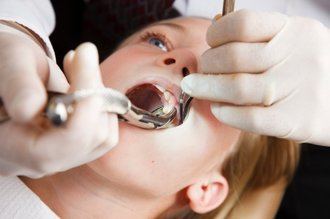
The gum tissue around the wisdom tooth is cut open to reveal the tooth. The tooth is loosened by gripping it tightly and wiggling it back and forth until it can be lifted out of the gums. Sometimes a tooth may be impacted so tightly that it cannot be simply lifted out of the gums. In cases like this the tooth will be broken up into pieces first before being removed. Depending on the incision and extraction site, sutures may be needed to close the area. Soluble sutures are the best option, which will dissolve on their own.
After the surgery you will need to rest. You need to be driven home by a friend or family member because of the anesthesia. You can expect for the extraction site to bleed for a little while after the surgery. Gauze will be applied at the completion of the surgery, and you will need to change it when it becomes soaked. If bleeding continues for longer than 24 hours you should call your dentist. Rest when you return home, but do not lie flat. This could prolong the bleeding. Prop your head up on a pillow when lying down. Your dentist will prescribe you pain medication, so if you become sore take as directed. You can also use an ice pack for the pain. Your dentist might also provide you with a cleaning solution to clean the extraction site.
You will be limited to soft foods for a few days after your surgery. Some recommended foods are:
- Gelatin
- Pudding
- Yogart
- Mashed Potatoes
- Ice Cream
- Thin Soups
- ...and other food you can eat without chewing.
When drinking, make sure you do not use a straw. The sucking motion can loosen your sutures and slow the clotting process. The same goes for smoking. If you have prolonged pain, bleeding, irritation, or don't feel that the extraction site is healing properly call your dentist for a follow up.